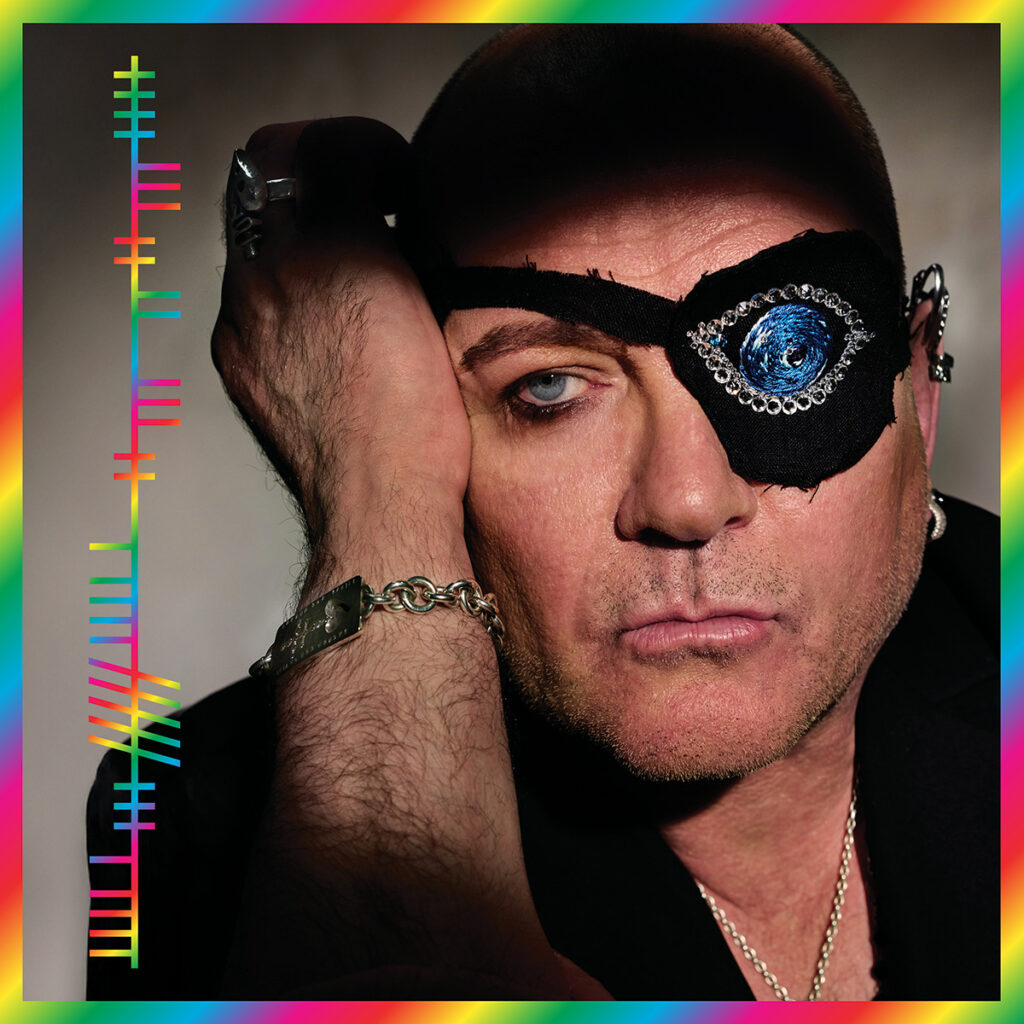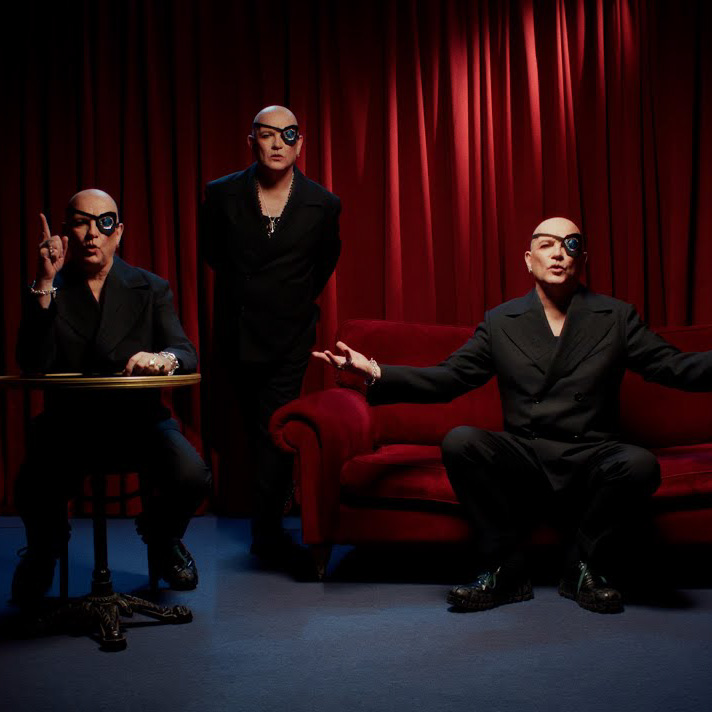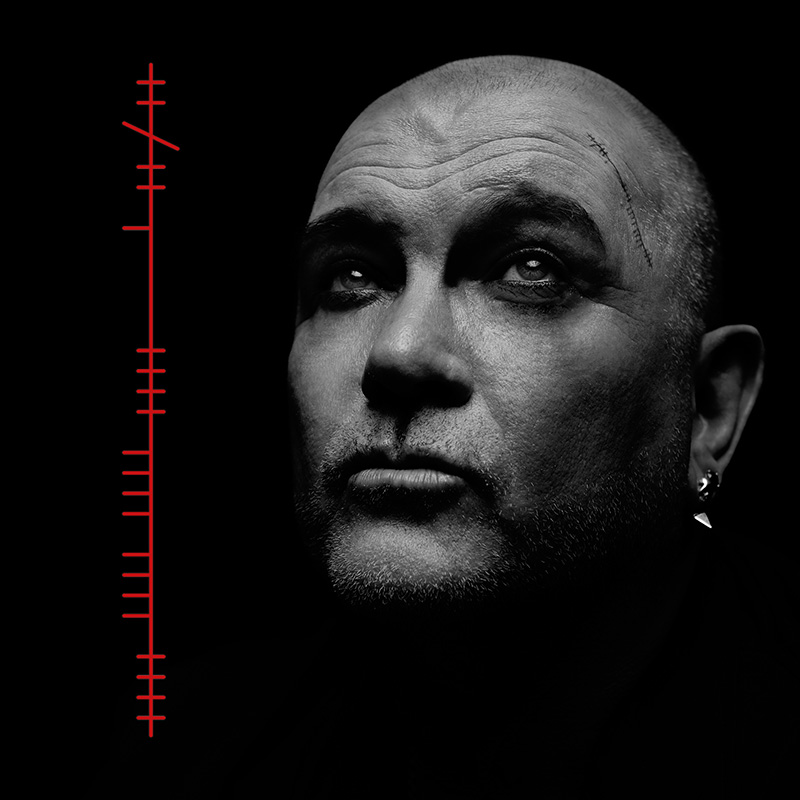
The 2011 album catholic – with a small c – oscillates musically and thematically between songs like Blame, dedicated to and about his father to Perfume, about our moments of promiscuity and lack of communication in The Only One.


16 years since his last album Shag Tobacco, it’s time to salute anti-hero Gavin Friday, who returns fittingly, at a time of upheaval, of political chaos, and of spiritual, financial and moral bankruptcy. Ireland is a very different place to the country Shag Tobacco was recorded in, and the intervening decade and a half coincided with a prolific work period for the singer. From soundtracks for In America , The Boxer and Get Rich Die Tryin' with Quincy Jones to collaborating on Nothing like the Sun with Gavin Bryars and the Royal Shakespeare Company, he moved away from the conventional parameters of the album. There was his acting debut (in Neil Jordan’s Breakfast on Pluto), Scott Walker collaborations and a Kurt Weill show at Dublin Theatre Festival. In personal terms, he endured illness, the end of his marriage and his father’s death. To some, the personal is political; but Gavin Friday is clear that this is “an emotional, not a political, album”. The singer likens catholic to “waking from a deep sleep, of letting go and coming to terms with loss”. And somewhere in the middle of all that, there are slivers of love, contentment and romance.
“Sometimes when you’re building songs, they tell you ‘look after me’ or ‘fuck off, and leave me alone’”
In opener Able, there is the kind of declaration that comes with age and experience, “I want you to love me… don’t want you to lie”. Friday turned 50 prior to recording catholic and the songs testify to a life lived, but one that’s far from over - physically or creatively. Lord I’m Coming might sound like an incantation to death, but is counter-acted by the titular positivity of It’s All Ahead of You. “Did you know that best is yet to come”, he asks rhetorically. The album oscillates musically and thematically between songs like Blame, dedicated to and about his father to Perfume, about our moments of promiscuity and lack of communication in The Only One.
Produced by Ken Thomas (Throbbing Gristle, Cocteau Twins, Sigur Ros), Thomas’ influence is most obvious on Cocteau-Twins shimmer of The Sun & The Moon and & The Stars. The album was birthed in a pool of 38 songs, which were whittled down. All songs were penned by Friday and his new musical partner Herbie Macken. Cocooned in Friday’s Killiney home, recording took just six weeks and involved musicians Gavin had worked with before: Multi instrumentalist Herbie Macken, Cellist Kate Ellis, Guitarist Jolyon Vaughan Thomas, Bassist Gareth Hughes, Guitarist Anto Drennan, Drummer André Antunes, and Moya Brennan [who guests on Lord I'm Coming ] and broadcaster John Kelly on harmonica. After spotting the Castleford Salvation Army outside a local shop, while mixing the album in Yorkshire Gavin invited them to contribute and Ken Thomas’ daughter Amy Odell also provides vocals on Land on the Moon. Everything builds toward Lord I’m Coming, an existential, orchestral psalm, an anti-pop composition of profundity.
In recent years, Gavin Friday’s output has been dominated by cinema, soundtrack and theatre, and its no surprise that their collective, lush shadow looms over catholic. Friday takes conventional song structures and scores them, adding Bowie-synths, sci-fi swirls, epic strings and Germanic rhythms.
Artist. Germanophile. Singer. Non-conformist. catholic. All are intrinsically Gavin Friday, but the latter is definitely spelt with a small ‘c’.
Word by Gavin Friday - Music by Gavin Friday and Herbie Macken
Arranged by Gavin Friday and Herbie Macken
Additional string arrangements by Jolyon Vaughan Thomas
Produced by Ken Thomas - Recorded by Jolyon Vaughan Thomas
Engineered by Jolyon Vaughan Thomas and Herbie Macken
Mixed by Ken Thomas - Mix assisted by James Mottershead
Recorded at Curlews, Dublin, Toy Town Studios, Cork, High Bank, Hampshire
Exchequer Studios, Dublin, Chairworks Studios, Castleford, West Yorkshire
Mixed at Chairworks Studios, Chastleford, West Yorkshire
A&R Roger Quail
Mastered by Ray Staff at Air Studios, London
All titles - Friday/Macken Copyright Control 2011
Front cover photography by Perry Ogden
Inside colour photography by Macie Pestka
Deathbed, and black and white shots by Darragh Shanahan
Make up - Clare Barman
Art direction and sleeve design - Redman AKA
Requiem for the fallen by Patrick McCabe
Inspired by the words, music and world of catholic (c) Patrick McCabe 2011
GAVIN FRIDAY BY PATRICK MC CABE: HOW WE MET.
If, as has been suggested in other quarters, Dublin in 1980 was a city the colour of claret with redbrick Georgian mansions boasting fine doors, fanlights and little iron balconies standing back from the road in well-bred reticence then I’m afraid as a recently arrived resident from the midlands town of Longford I didn’t see much sign of it.
In fact, if anything,it looked like Dodge city after the Hole-In-The-Wall gang had shot it up,or maybe Atlanta in the aftermath of the fire-with its own share of smooth-talking sharp-suited amoralists, our very own homegrown carpetbaggers, who were already in the process of slyly rezoning enormous swathes of it, these smug wolves, these ballad-singing ‘common touch’ men of the people.
About whom enough already-we know where they led us,and we also know where we followed them, with our faces stuffed with burgers and ice-cream and with not so much as a moral backbone to be found about the place, no more than you’d be likely to locate between the head and the tail of a pantechnicon-flattened iguana.
The first time I saw Gavin he was standing outside Burgerland on O’ Connell Street-that blazing emporium where Radio Nova(‘Broadcasting in the Bay Area’,no less)chewed incessantly on its Wrigleys, snapping its fingers, urging everyone to say goodbye to Paddy, his wellingtons and the bog.
As I made my way past yet another new outlet ,Baskin Robbins ice-cream parlour (150 flavours!), along the Avenue Of The Three Adulterers as the main thorughfare was christened by James Joyce’s father,I remember I was carrying a teacher’s brief case and,at 25, with the burden of responsibility for which I was ill-prepared and to which I was ill-suited, was already feeling superfluous-superannuated.All the hippies are dead, a friend had only recently said to me, our time is over.
Gavin’s hands were nearly as big as his hair,I noticed, and he tended to wave them about, gesturing effusively.
As I passed him by,I couldn’t help overhearing him discussing The Beatles’ Taxman. He was comparing it to a current release by Paul Weller and The Jam.
Which I thought was impressive-his knowing about it, I mean-for he seemed to me much younger than I was. Five years can mean a lot at that age-as I say, I was 25.
I spotted him about here and there after that - I had seen his band The Virgin Prunes a couple of times. Back in those abortion-obsessed days of the eighties when Ireland seemed to have little to do but argue itself blue in the face about ectopic pregnancies as its infrastructure fell to bits around it.
An image returns, hysterically burlesque and simultaneously heartbreaking in its maddening innocence.As a punter whistles whilst upending a hopelessly buckled telephone kiosk door, clambering in under it as if it were the most natural thing in the world, with sophisticated insouciance proceeding to make his call.Before crawling back out again like a squirrel and taking time to dust down his suit.
But there were good things too-Jim and Peter Sheridan’s Dark Space at The Project theatre-where U2 and The Prunes had played.Gavin’s screeching of The Walls Of Jericho was good,as were the stage antics muich of which he’d learned from immersing himself in the performance art of Agnes Bernelle and Nigel Rolfe in The Project.
I didn’t see him for a long time after that-in the 1990’s when I was living in London, in fact-when he was recording In The Name Of the Father.
We started to spend some time together-a lot of time, actually. That he he liked disco music I was pleasantly surprised to hear-and his Behanesque combination of sensitivity and pugnaciousness was something to which I found I willingly responded-in the same way as I would, later on,to Shane Mc Gowan’s Pogues-delighting in their appropriation of the builder’s labourer’s dark Sunday suit as a garb of defiance.
I met a lot of his friends-and it was refreshing also to observe that,no matter what the company, his views and attitude were rarely seen to change.
I approached himself and Maurice Seeezer, his collaborator,about creating a tone-poem series for RTE.It was a blast.Based on my book EMERALD GERMS OF IRELAND, a quirky parody of old-time Irish music books which was a total and utter critical and commercial failure - we delivered what, I think, was an extraordinary work, a ten-part radio series, produced by the great Anne Walsh and repeated three times by RTE at the time.
We used to like eating in the Alpha Café off Grafton Street -for ‘Mammy’ food as Gavin likes to call it. We wandered all around Dublin acting the maggot.One night I heard him experimenting with a riff, practically talking in tongues and began to understand the instinctive source of his art. Irish folk and traditional were now entering the mix, with Martin Hayes and Denis Cahill attracting his attention.
I wrote some words too for his album Shag Tobacco, which I thought great then and think even better now.
On it he looks like Laurence Harvey in space, louchely and mischieviously smoking cigarettes.
It’s a defiant and humorous album, full of love and not yet middle-aged zest. Catholic is different. Mature is not a word I like, and I certainly wouldn’t wish maturity on this artist.
But I suppose in the eighties our parents were alive.The fight seemed worth it, there was someone to blame-and in Ireland the Catholic church has always been an easy target.
The problem is even Irish atheists tend to betray small hints of their Catholicism.Ah for Jesus sake how could God exist!
It’s not the same in the UK. What are you all fighting about over there? The cockney taximan routinely says - or used to.
For Friday it was a war between restraint and excess - rococco in the ring belting it out with protestant continence. Growing up on the border I have always been intrigued by this particular set of tensions.It is no accident that Guggi and Bono, fellow musicians and long-time associates, are both non-Catholics.
But I never disowned my DNA-Catholic, Irish, Gaelic,call it what you will.And neither did Friday.
We were as Irish as anybody except we didn’t play Gaelic football and didn’t feel the need to be ashamed of saying it either.Aside from this anyway, its cultural wealth was there at our disposal, and we wanted it.
With the result that anyone expecting all the usual Pavlovian responses to Irish Catholicism will be deeply disappointed with this newly compiled work over which there hangs the evocative fragrance of incense swirling throughout the ages.If we could mix up the epochs and recruit james Joyce and John Mc Cormack for a session, I’d have O’Riada call up the Pope - then we could perform this opera in the Sistine chapel.
I don’t know what to say about ‘catholic.’ If Shag Tobacco wasn’t one hundred per cent a masterpiece, it might have been because Gavin was too young to surrender. This time that tendency has come full circle and the ghosts of Joyce’s short story Grace, those lay theologians who are so much a part of this Dubliner’s inheritance have become more defined. Debating ethics and the secrets of consciousness, through yellow brick streets carrying leather-bound Missals and copies of Thomas A Kempis’s Imitation of Christ, emerging like blinking hermits out of the shadows of history, as they part the curtain of a grey Liffey-side fog.Forming a small hunted knot of the devout, swinging a censer by the gates of Glasnevin cemetery.
- Catholic, they croak, wreathed in sin and shame and glory, redolent of blood, elevation and and suffering.
catholic. With a small ‘c.’ Reverently, on its knees ,this new album has released an inner Monteverdi, and along with it a tidal wave of emotional complexity.
Ave.
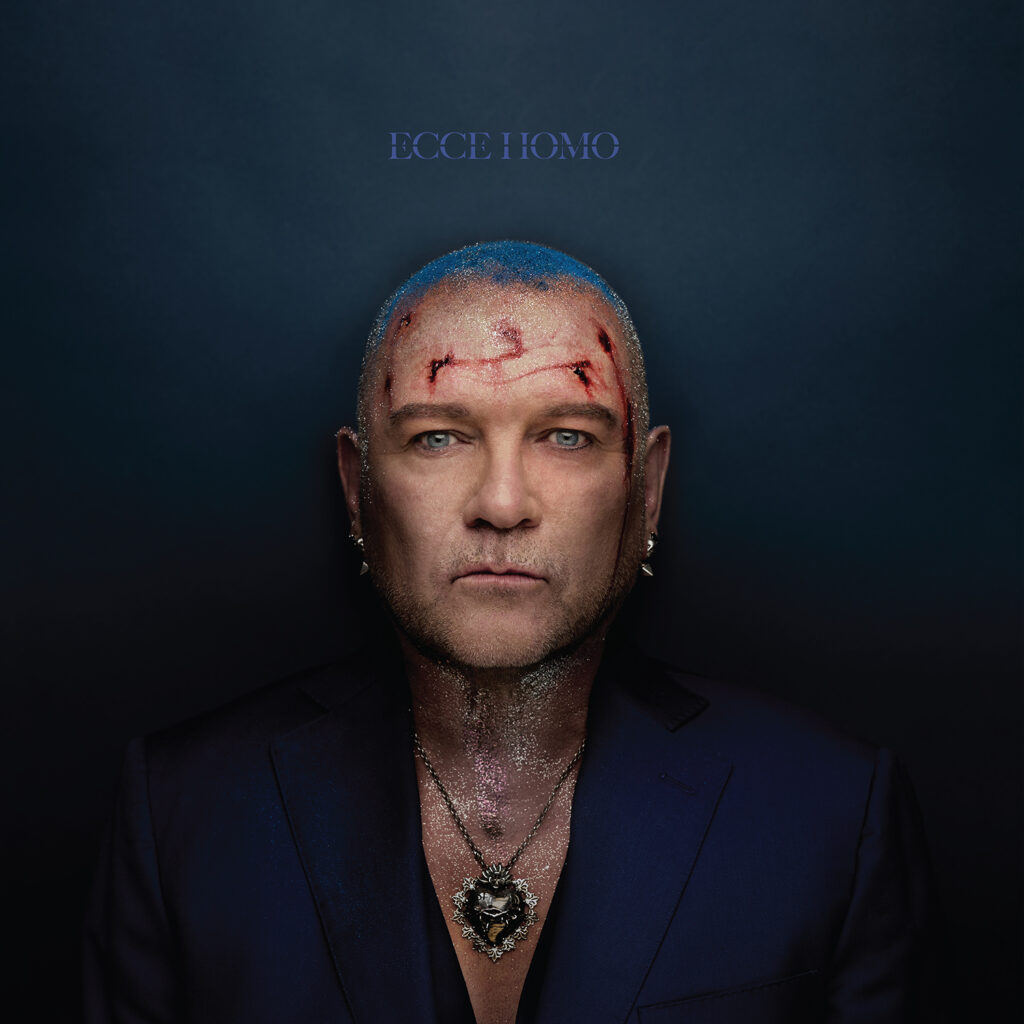
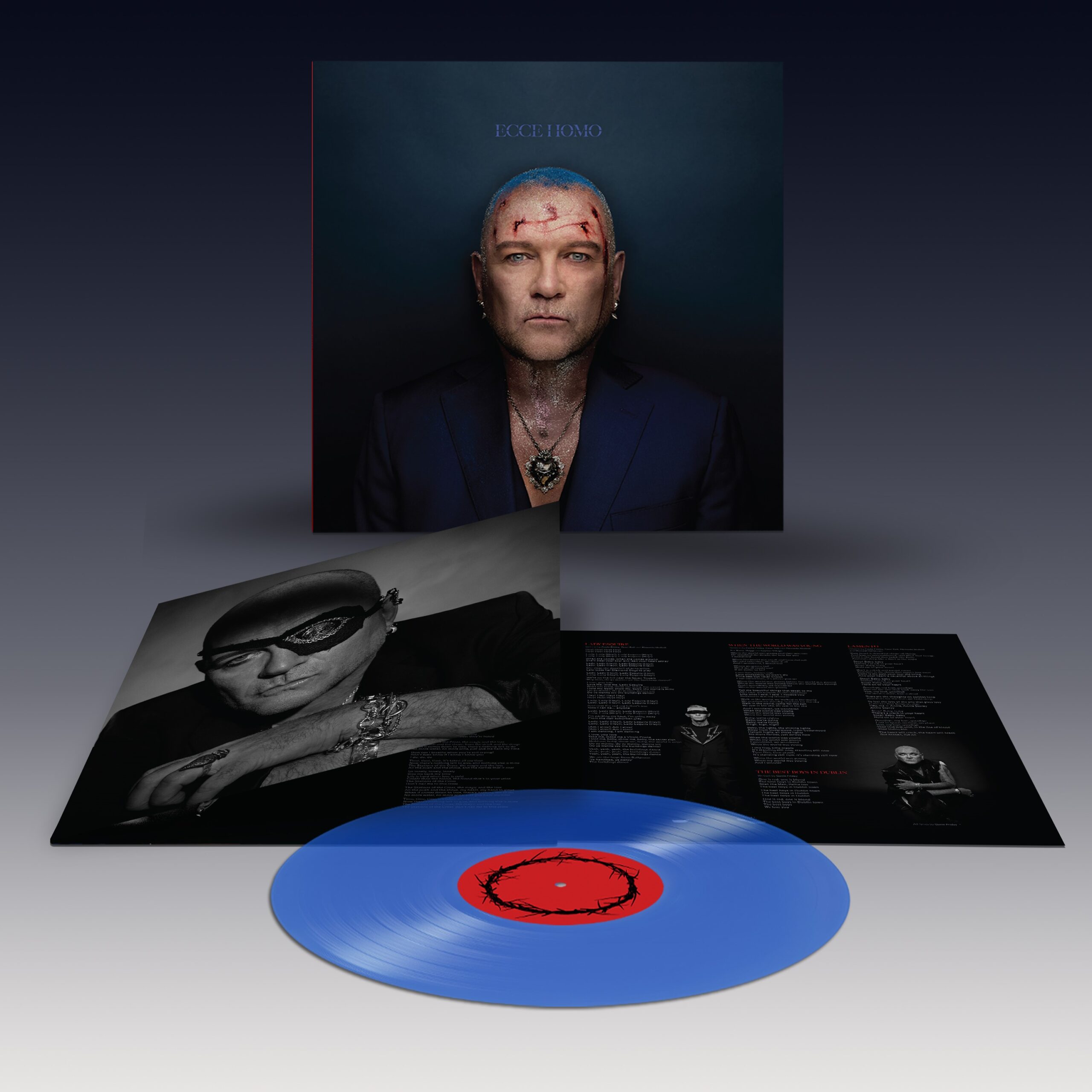
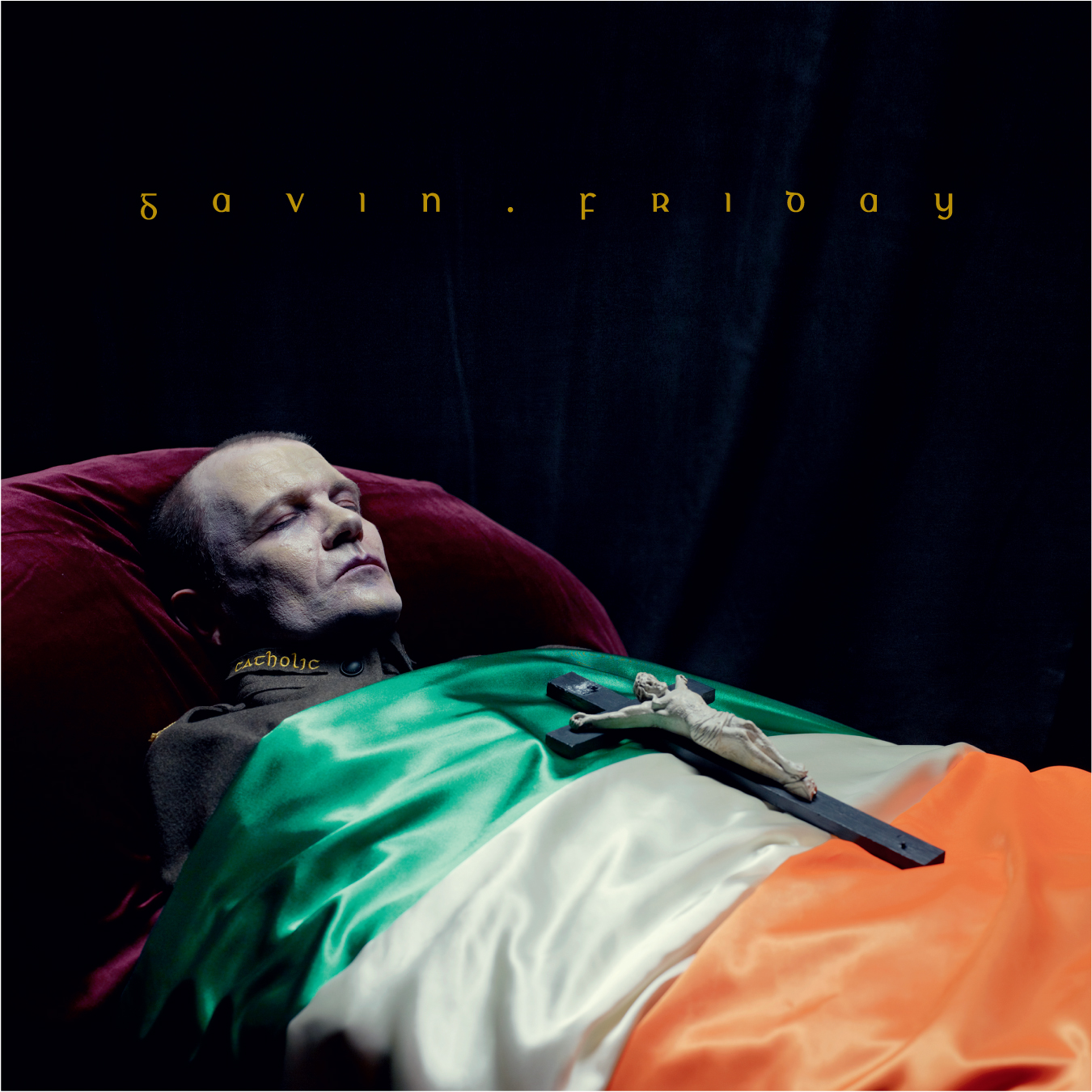
The album's cover photo was inspired by the painting 'Michael Collins, Love of Ireland' by Sir John Lavery. Gavin had seen the painting at the Sir John Lavery "Passion and Politics" exhibit in Dublin at the Hugh Lane Gallery in September 2010: "The images were of statesmen of the 1916 Rising. They were all these remarkable dead men - murdered or assassinated by the Irish and the British alike. I was struck by the genius and promise lost by those lives cut short. There was an image of Michael Collins lying in state. The cover pays homage to that."
Photographer: Perry Ogden, Video camera: Darragh Shanahan.
Q magazine
Uncut
Mojo