This autumn sees the release of Gavin Friday’s much-awaited new album, Ecce Homo, his first in over thirteen years, and via BMG. It is a work that heralds a fuller, more sonorous, form of expression for this ever-evolving artist, one that transcends the prescribed conventions of genre, breaks new ground and brooks no compromise.
Where loss, filial grief, remorse and existential disquiet were the more conspicuous tenets of Friday’s 2011 release, catholic, the presiding spirit of Ecce Homo is altogether freer, less shackled, and sovereign — indomitable, too. Self-tyranny and its capitulations have here been sublimated into strength and enduring triumph. The credo is that of a man beheld, yes, but never beholden.
There is throughout Ecce Homo the same synth-powered pulse and pump one has come to expect from this fiercely impassioned iconoclast — glam rock’s platform stomp in perfect sync with post-punk’s oxblood heart — and yet its medleyed parts resound as if new-minted: proud, valourous, regenerate. Here, torch songs catch in a blaze of beauty, so too the embered days of youth. Friday’s talismanic touchstones are ringingly manifest on Ecce Homo, among them Brel, Ginsberg, Grosz and Callas, their galvanic charge persisting like a ghost voltage in what is a new and wholly inimitable register of Electronica. Suffused, as many of the songs are, with soaring orchestration, there is nonetheless a stark, near-Brutalist tonality to the record — industrial, even. A sensory (and sensuous) Berghain, if you will, Ecce Homo is richly redolent of the Weimar years, of discord and dance — of decadence! — and is stamped throughout with the hallmarks of Friday’s glittering art: the salt of sex, the heart’s burlesque.
Recorded in Dublin and London, Ecce Homo is produced by Dave Ball (of Soft Cell), Michael Heffernan and Riccardo Mulhall.
Produced by Dave Ball, Michael Heffernan with Gavin Friday and Riccardo Mulhall
Mixed by Michael Heffernan
Recorded by Michael Heffernan and Riccardo Mulhall
Assistant Engineers Paddy Ewart Kennedy and Cian Synnott
Mastered by Christian Wright at Abbey Road Studios, London
Directed and Arranged by Gavin Friday
All songs published by Mute Song/Copyright Control © 2024
Recorded in Dublin and London at Lennox Street Studios, Kick Studios, Curlews, Temple Lane Studios, L4 Studios, The Clinic and The Meadow
Mixed in London and Dundalk at L4 Studios and Black Mountain Studios
A GAVART Ltd Production, May 2024
Today, Irish renaissance man Gavin Friday returns with details of his highly anticipated new solo album Ecce Homo. Out 25th October via BMG, the new album – which was produced by Soft Cell’s Dave Ball and Michael Heffernan - marks his first since 2011’s “Catholic” and is announced alongside it’s title track and an eponymous digital EP featuring two remixes and an instrumental version of the track.
An artist who needs little in the way of an introduction, Friday is perhaps best known as the founding frontman of cult Irish post-punk outfit Virgin Prunes, his career as a genre-hopping, award-winning songwriter, composer, actor, visual artist, and creative director has spanned four decades and has seen him collaborate with everyone from his childhood friends in U2 through to Colin Newman, Laurie Anderson, Sinead O’Connor, Scott Walker, The Fall, Quincy Jones, and many, many more. He has scored music for Academy Award nominated films such as In The Name of The Father and In America (earning Ivor Novello and Golden Globe nominations for his work on the latter), and his artistic contributions extend to visual arts, with several exhibitions showcasing his work, as well as collaborating and performing on-stage with the Royal Shakespeare Company. The last year also saw the release of the animated film Peter And The Wolf, which featured scoring and narration by Friday, as well as the recent reissuing of classic Virgin Prunes albums and EPs on vinyl.
Driven alternately by thundering electronics that recall the power of the Prunes and exquisite acoustics that reflect the beauty of his most recent solo work and soundtracks, Ecce Homo is an ecstatic and unbound expression of anger and independence, of severing oneself from stereotypes of what you’re supposed to be while also acknowledging that our hardest battles are often our collective ones. There are love songs and fight songs, reflections on loss and reveries of nostalgia, anthems for solidarity and excoriations of the powerful. Friday thinks it’s the most honest album he’s ever made; it is also his most riveting.
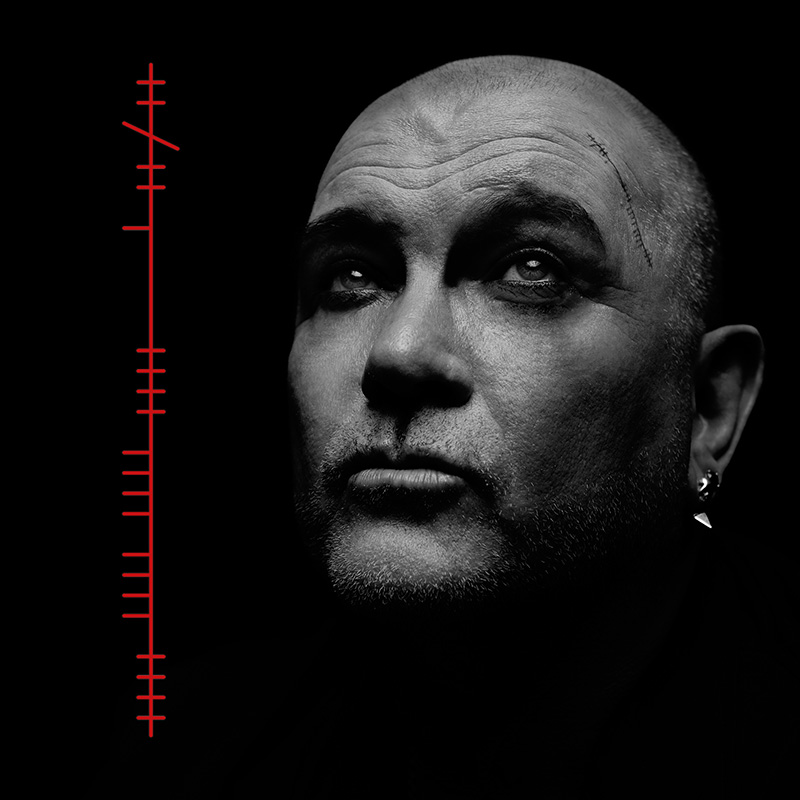
Having teased details of the track / single in the months leading up to the release with mysterious posts written in Ogham - an ancient runic language that was used in Ireland and parts of the UK between the 5th and 9th centuries - the first taste of the album comes in the form of it’s title track “Ecce Homo”. The track is a pulsing, pulverizing menace, its streaks of florid noise and walls of hard-edged rhythms squaring up against enemies of inclusion and liberty as Friday throws the words of Pontius Pilate back at our persecutors, promising to “Fight fire with fire / We can walk on water” over warped gospel harmonies.
Speaking on the track, Friday says “the track ‘Ecce Homo’ is my own personal kick in the head and kiss on the cheek to a world gone very wrong.”
Ecce Homo began more than a decade ago with a surprise email from Dave Ball, the Soft Cell co-founder who produced Virgin Prunes 40 years ago. They hadn’t seen each other during that long span, but Ball asked if Friday wanted to conspire on a cover of Suicide’s “Ghost Rider” for Alan Vega’s 70th birthday. For several years, they bounced ideas for other songs back and forth via email until Friday finally visited him in London for a series of studio sessions. They wrote the bulk of Ecce Homo’s music together, their interpersonal dynamic resulting in tracks that moved freely between disparate emotional ends.
Friday, though, wanted to make it all bigger, to drape the songs in the finery and grandeur he’d indulged with his soundtrack work. He did that back in Dublin with a cast of familiar collaborators including producer Michael Heffernan as he also cared for his ailing mother, then suffering the final stages of Alzheimer’s. Enraged by the rise of international strongmen but inspired by a long, loving, and stable relationship with another man after a prolonged divorce, Friday built Ecce Homo as a monument of and to his own emotions. In early 2020, he was ready to mix it when Covid-19 arrived. He put it down for two years, vowing to revisit it only when he could make a little more sense of the world. His mother died, as did Hal Willner, one of his closest collaborators, and one of his two beloved dogs, Ralf. Hard seasons, all around.
That difficult gap seemed to supercharge Ecce Homo, enhancing not only its sense of deserved indignation but also amplifying the tenderness and love that undergird so many of these songs. Hurt comes from every side here, in every possible shape, but the real core of the album is a reaction rooted in hope, in seeing the struggles of the past and the possibilities of the future through the same unified gaze. It is a stirring testament to finding comfort and strength wherever we can, to enduring in whatever way we must.
When Friday was a teenager, alienated from the Catholic church and looking for meaning, music became his godsend, his lifeline, his revelation. Or, as he calls it, “the release where I could bleed publicly.” He surmises it saved his life. Though it is rooted in so much loss, Ecce Homo advances that story of survival, of how we are always looking for what can ferry us into the next phase of our life. It is neither a happy album nor a tragic one; it is, instead, a bracingly honest thing, staring at both sides of a life and testifying to how it has been and how it may yet be.
Vocals, Backing Vocals Gavin Friday
Moog and Roland Synths, Bass, EFX Boxes Dave Ball
Drum Programming, Roland SH-101 Synths, Synth Strings, Theremin, SFX, Glockenspiel Riccardo Mulhall
Bass Clarinet, Contrabass Clarinet, Baroque Bassoon, Electronics, English Horn, Saxophone Renaud Pion
Cello Kate Ellis
Synths, Programming, Percussion, Keyboards Michael Heffernan
Electric Guitar, EBow Robson Rocha
Acoustic and Electric Guitar Stephen Ward
Synths, Keyboards, Programming Paddy Ewart Kennedy
Backing Vocals Lydia Des Dolles
Backing Vocals, Omnichord Carlsbad
Backing Vocals Aisling Browne
Soprano Miriam Blennerhassett
Viola Cora Venus Lunny
Piano Kevin Neary
Bass Katherine Deal
Bass Mark Shortall
Violin Kenneth Rice
Violin Lynda O’Connor
Viola Lisa Dowdall
Cello Caitriona Finnegan
‘Amaranthus’ Voicenote Anne Storey Hanvey
The Best Boys Stan and Ralf
String arrangement for ‘The Best Boys in Dublin’ and ‘When the World was Young (Reprise)’ by Kenneth Rice
Photographer Barry McCall
Assisted by Katie Chesher
Studio Tech Dylan Madden
Studio and Set Build Bond Street Studios, Dublin
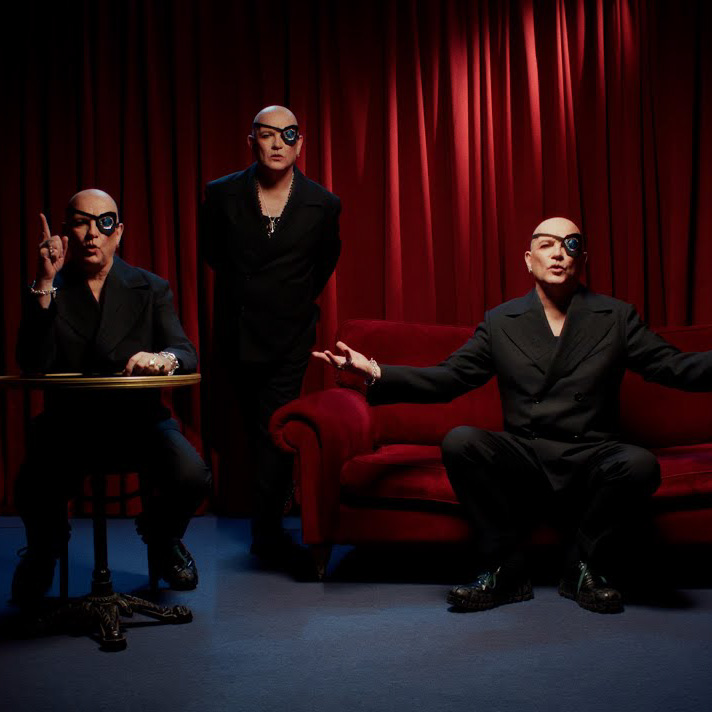
Creative and Styling Sharon Blankson
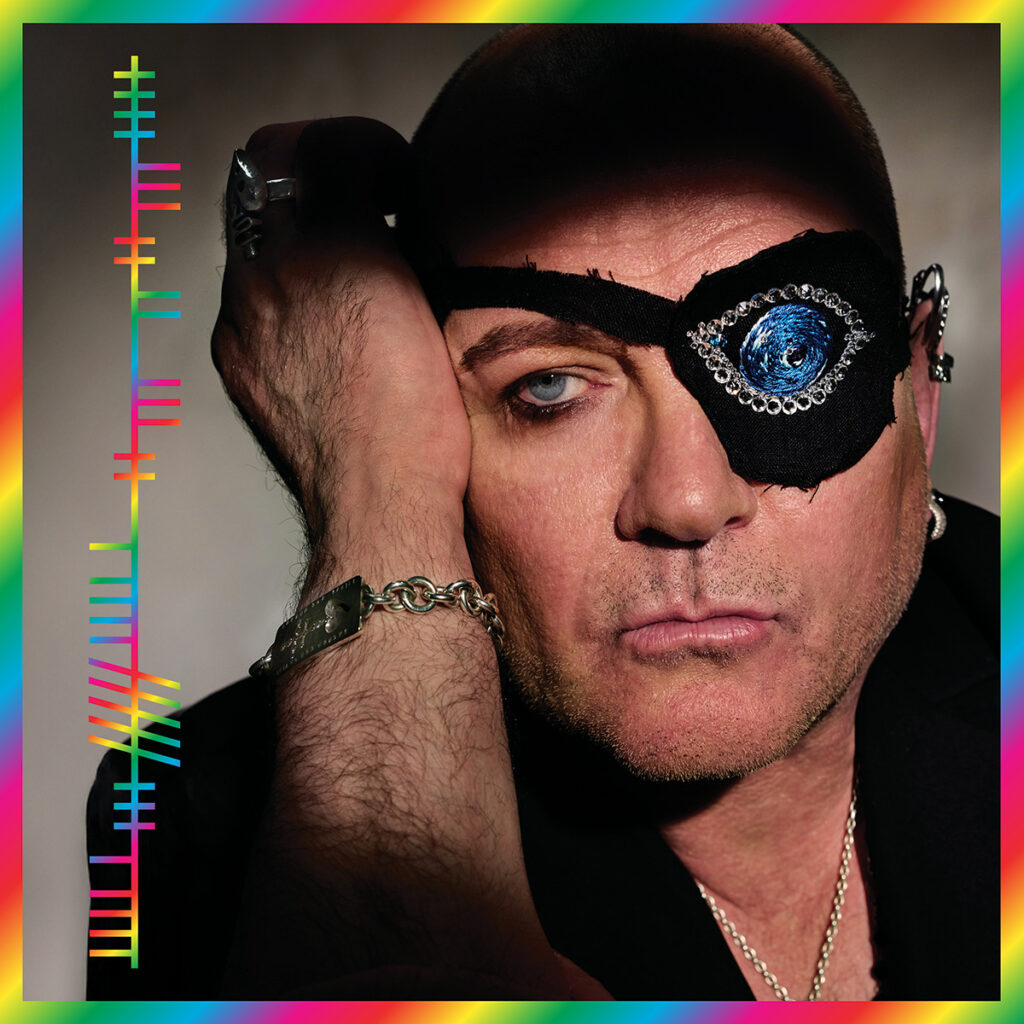
Grooming, Creative and Friday’s ‘Dali Eyepatch’ Carly Burns
Make-up and Prosthetics Artist Fiona Connon
Videographer Ross Stewart
Production Manager Maeve-Ann Austen
‘Ecce Homo’ Embroidery Domino Whisker
Tailoring Paul Henry
Cover Concept and Creative Direction Gavin Friday
Design Philip Marshal
Team GF Caroline Von B, Carly Burns, Maeve-Ann Austen, Michael Heffernan, William Ryan, Victor Reid, Raymond Bell, Sir Stanley Manly
BMG Alistair Norbury, Ben Easton, Holly Barringer, Dan Baxter